
What Is PCOS and Why Does It Affect Your Period?
Polycystic Ovary Syndrome (PCOS) is one of the most common hormonal disorders affecting women of reproductive age worldwide. According to the World Health Organization (WHO), PCOS affects approximately 8–13% of women globally – and yet, up to 70% of cases remain undiagnosed. Understanding how PCOS affects menstrual cycles is critical for early intervention and long-term health.
PCOS affects menstrual cycles by disrupting ovulation due to hormonal imbalance, leading to irregular, missed, heavy, or delayed periods. Proper treatment and lifestyle changes can help regulate cycles. For women experiencing these symptoms, early evaluation at a trusted facility like Revive Hospitals can make all the difference.
How Hormonal Imbalance in Women Disrupts Ovulation
The menstrual cycle is governed by a delicate balance of hormones—primarily estrogen, progesterone, luteinizing hormone (LH), and follicle-stimulating hormone (FSH). In women with PCOS, elevated androgen levels (often called “male hormones”) disrupt this balance, preventing the ovaries from releasing eggs regularly and leading to PCOS irregular periods and unpredictable cycles.
This hormonal imbalance in women leads to anovulation – cycles where no egg is released. Without ovulation, the uterine lining does not shed as expected, resulting in missed or irregular periods. Elevated insulin levels, another hallmark of PCOS, further amplify androgen production, creating a self-reinforcing cycle of hormonal disruption.
Research published in the Journal of Clinical Endocrinology & Metabolism indicates that up to 80% of women with PCOS experience chronic anovulation. This makes hormonal imbalance the primary driver of menstrual cycle disorders in PCOS patients.

Common Menstrual Cycle Disorders Caused by PCOS
PCOS irregular periods take several forms, and recognizing them early is the first step toward treatment. Here are the most common menstrual cycle disorders women with PCOS experience:
- Oligomenorrhea: Infrequent periods occurring fewer than 8 times per year, often with cycles longer than 35 days.
- Amenorrhea: Complete absence of menstruation for 3 or more consecutive months, commonly seen in untreated PCOS.
- Menorrhagia: Unusually heavy or prolonged menstrual bleeding caused by a thickened uterine lining built up over anovulatory cycles.
- Dysmenorrhea: Painful periods that may accompany irregular cycles in some PCOS patients.
- Spotting Between Periods: Light, unpredictable bleeding that occurs outside the normal cycle window.
If you are experiencing any of these symptoms consistently, consulting a gynecologist in Attapur Hyderabad at Revive Hospitals is strongly recommended for accurate diagnosis and a personalized care plan.
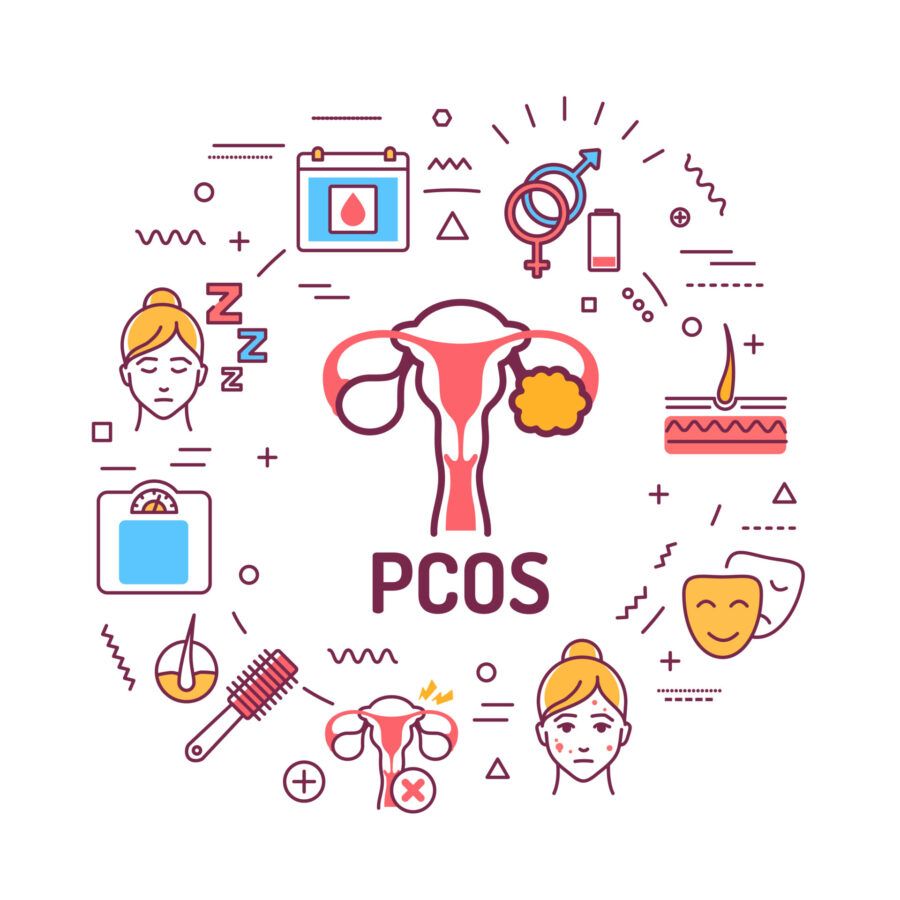
PCOS Symptoms in Women You Should Not Ignore
Beyond irregular periods, PCOS presents a wide spectrum of symptoms. Many women dismiss early warning signs, delaying diagnosis by years. The following PCOS symptoms in women require prompt medical attention:
- Unexplained weight gain or difficulty losing weight, particularly around the abdomen
- Excess facial or body hair growth (hirsutism) due to elevated androgens
- Persistent acne or oily skin that does not respond to conventional treatment
- Hair thinning or male-pattern baldness on the scalp
- Dark patches of skin (acanthosis nigricans) around the neck or underarms, signaling insulin resistance
- Mood swings, anxiety, or depression linked to hormonal fluctuations
- Difficulty getting pregnant due to irregular or absent ovulation
It is also worth noting that certain early signs of related conditions – such as tiredness, ankle swelling, foamy urine, dry skin, loss of appetite, and frequent urination at night – may appear mild but can signal kidney stress associated with metabolic complications of PCOS. Early detection at Revive Hospitals, Attapur Hyderabad helps prevent progression to chronic kidney disease and other serious complications.
Delayed Ovulation Causes and Long-Term Risks
Delayed ovulation causes in PCOS go beyond hormonal imbalance alone. Stress, obesity, thyroid dysfunction, and elevated prolactin levels can compound the problem. When ovulation is consistently delayed or absent, women face a significantly elevated risk of endometrial hyperplasia – an abnormal thickening of the uterine lining – which, if left untreated, can progress to endometrial cancer.
Long-term unmanaged PCOS is also associated with Type 2 diabetes, cardiovascular disease, and metabolic syndrome. This is precisely why PCOS treatment in Attapur should begin as early as possible. Women in the region now have access to comprehensive hormonal and reproductive health care at hospitals in Attapur, particularly at Revive Hospitals, which offers specialized gynecological services tailored to each patient’s unique hormonal profile.
PCOS Treatment Options Available Today
Modern PCOS treatment options are multifaceted, combining medical therapy, lifestyle modification, and in some cases, surgical intervention. There is no one-size-fits-all cure, but a well-structured treatment plan can significantly regulate menstrual cycles, restore fertility, and reduce long-term health risks.
Medical Management
- Hormonal contraceptives: Combined oral contraceptive pills regulate periods, reduce androgen levels, and improve acne and hirsutism.
- Metformin: An insulin-sensitizing medication that lowers insulin resistance and may restore ovulation.
- Letrozole or Clomiphene: Ovulation-inducing medications prescribed when pregnancy is desired.
- Anti-androgens (e.g., Spironolactone): Reduce hair growth and acne by blocking androgen receptors.
Lifestyle and Nutritional Changes
Even a modest weight loss of 5–10% body weight has been shown by the American Society for Reproductive Medicine (ASRM) to restore ovulation in up to 55–60% of overweight women with PCOS. A low-glycemic diet, regular physical activity, and stress management form the cornerstone of non-pharmacological PCOS treatment.
Surgical Options
Laparoscopic ovarian drilling (LOD) is a minimally invasive procedure that can trigger ovulation in women who do not respond to medication. It is typically considered when first-line treatments have been ineffective.
Why Choose Revive Hospitals for PCOS Treatment in Attapur, Hyderabad?
For women across Hyderabad seeking expert gynecological care, Revive Hospitals stands out among the top hospitals in Hyderabad for reproductive and women’s health. As one of the leading hospitals in Attapur, Revive Hospitals offers end-to-end PCOS treatment in Attapur – from initial hormonal evaluation and ultrasound assessment to fertility counseling and long-term metabolic monitoring.
The team of experienced gynecologists at Revive Hospitals brings deep expertise in managing PCOS, menstrual cycle disorders, and complex hormonal conditions. With state-of-the-art diagnostic facilities and a patient-centered approach, the hospital provides personalized care that addresses not just the symptoms, but the root causes of PCOS.
Whether you are looking for the best gynecologist hospital in Hyderabad, a trusted gynecologist in Attapur Hyderabad, or simply need to Consult the Best Hospital in Attapur for irregular period concerns, Revive Hospitals is equipped to guide you every step of the way. Their multidisciplinary team ensures seamless collaboration between gynecologists, endocrinologists, nutritionists, and mental health professionals — offering a truly holistic care model.
Conclusion: Take Control of Your Hormonal Health Today
PCOS is a lifelong but manageable condition. Understanding how hormonal imbalance in women drives menstrual cycle disorders, delayed ovulation, and irregular periods is the first step toward reclaiming your health. With the right PCOS treatment options — including medication, lifestyle change, and expert medical support – most women can significantly improve their quality of life and reproductive outcomes.
If you are experiencing PCOS irregular periods, unexplained weight gain, acne, or fertility concerns, do not wait. Consult the best hospital in Attapur – Revive Hospitals – for a comprehensive evaluation. Early diagnosis is your most powerful tool against the long-term complications of PCOS.
📞 Book Your Appointment at Revive Hospitals, Attapur, Hyderabad – Your Partner in Women’s Health.